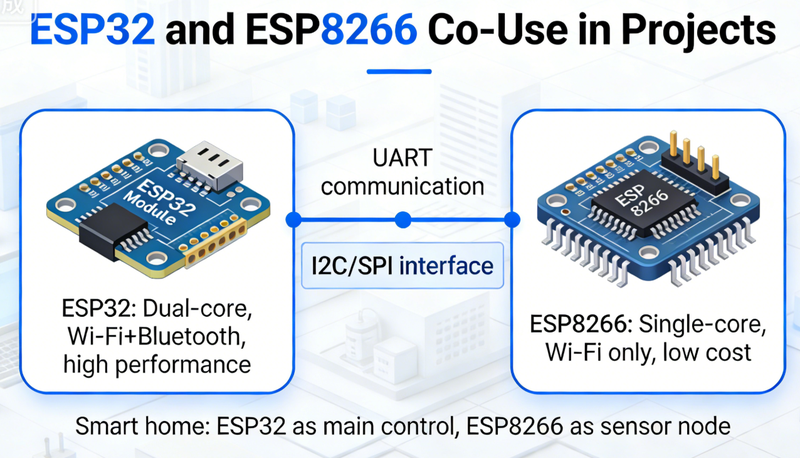
First, determine the core functionality of your project. If you're building a simple IoT sensor node to measure temperature and humidity, a basic ESP32 board with Wi - Fi and Bluetooth capabilities may suffice. However, if your project involves complex image processing or real - time data analytics, you'll need a board with more processing power and memory.
Power Consumption
Consider the power requirements of your project. If your device needs to run on battery power for an extended period, look for an ESP32 development board with low - power modes. Some boards are designed to consume minimal power during sleep or idle states, which is crucial for battery - powered applications.
2. Evaluate the Hardware Features
Processor Performance
The ESP32 comes with different processor configurations. Check the clock speed, number of cores, and memory (both RAM and flash) of the development board. A higher - clocked processor and more memory will allow your board to handle more complex tasks and larger data sets. For example, if you're working on a project that involves running machine - learning algorithms, a board with a faster processor and more memory will be beneficial.
Connectivity Options
Ensure that the board has the necessary connectivity options for your project. Most ESP32 boards support Wi - Fi and Bluetooth, but some may also offer additional interfaces such as Ethernet, LoRa, or ZigBee. If your project requires communication with other devices over a long - range network, a board with LoRa support might be a good choice.
GPIO Pins and Expansion
Look at the number and type of General Purpose Input/Output (GPIO) pins available on the board. More GPIO pins give you more flexibility to connect external sensors, actuators, and other devices. Additionally, some boards have expansion headers or connectors that allow you to easily add shields or modules to enhance the functionality of the board.
3. Consider the Software and Development Environment
Programming Language Support
Check if the development board supports the programming languages you're familiar with. The ESP32 is commonly programmed using the Arduino IDE, which is beginner - friendly and has a large community of developers. However, some boards also support other programming languages such as MicroPython, which can be useful for rapid prototyping.
Development Tools and Libraries
Look for a board that has a rich set of development tools and libraries available. These tools can simplify the development process and help you quickly implement features such as Wi - Fi connectivity, sensor reading, and data processing. For example, the ESP - IDF (Espressif IoT Development Framework) provides a comprehensive set of libraries and tools for developing applications on the ESP32.
4. Assess the Community and Support
Online Community
A large and active online community can be a valuable resource when choosing an ESP32 development board. Look for boards that have a dedicated forum or community where you can ask questions, share your projects, and find solutions to common problems. Boards with a large user base are more likely to have up - to - date documentation, tutorials, and example code.
Manufacturer Support
Consider the level of support provided by the board's manufacturer. Some manufacturers offer technical support, firmware updates, and product documentation. Good manufacturer support can be crucial, especially if you encounter issues with the board or need help with advanced features.
5. Cost and Availability
Price
Compare the prices of different ESP32 development boards. The price can vary depending on the features, brand, and quality of the board. However, don't always go for the cheapest option, as a low - cost board may lack some of the features or reliability you need for your project.
Availability
Ensure that the board is readily available in the market. Some boards may be in high demand or have supply chain issues, which can cause delays in your project. Check with local electronics stores or online retailers to see if the board is in stock.
FAQ
Q: Can I use any ESP32 development board for my IoT project?
A: While most ESP32 development boards have basic Wi - Fi and Bluetooth capabilities, not all boards may be suitable for your specific IoT project. You need to consider factors such as power consumption, connectivity options, and processing power.
Q: Is it necessary to have a large online community for the development board I choose?
A: It's not strictly necessary, but a large online community can be very helpful. It provides access to a wealth of knowledge, example code, and solutions to common problems, which can speed up your development process.